NAD+, Without the Hype.
The biology is genuinely interesting. The marketing has run some distance ahead of the clinical trials.
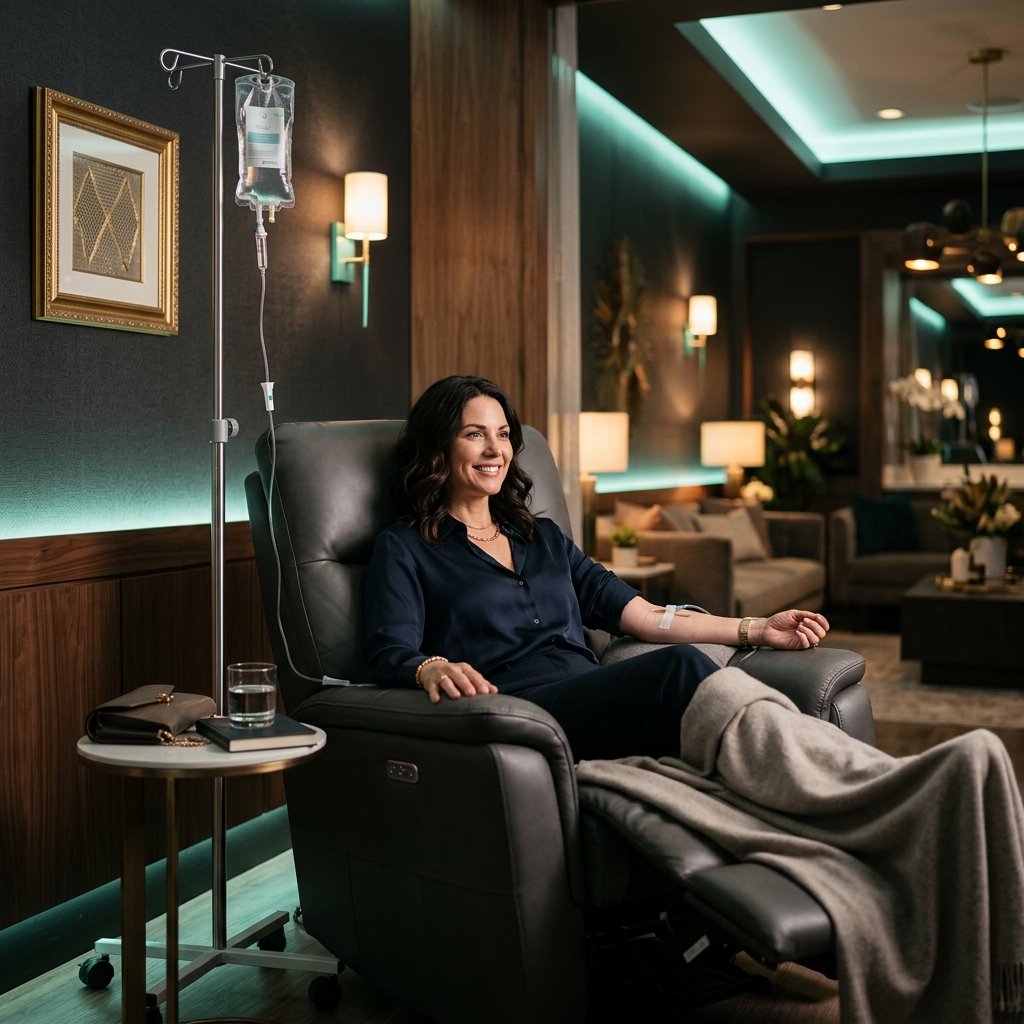
Few molecules have travelled further from the biochemistry textbook to the supplement aisle than nicotinamide adenine dinucleotide. NAD+ now appears on menus, in headlines, and in a great many claims that its own research literature does not yet support.
The underlying biology is real and genuinely interesting. The distance between that biology and a proven clinical outcome is where most of the confusion lives.
What NAD+ does
NAD+ is a coenzyme present in every living cell. Its central job is electron transfer: it accepts electrons in metabolic reactions, becoming NADH, and hands them on. That shuttle sits at the heart of how cells convert food into usable energy.
It is also consumed as a substrate by two families of enzymes that have drawn considerable research attention:
- Sirtuins, which are involved in gene expression and cellular stress responses.
- PARPs, which participate in DNA repair.
This is the important structural point. Those enzymes do not merely use NAD+ as a helper — they consume it. Demand for NAD+ therefore rises when DNA damage and cellular stress rise.
The decline, and what is actually established
Measurements across a range of tissues indicate that NAD+ levels fall with age. That observation is reasonably well supported and is the foundation of the entire field.
What follows from it is where care is required. That a molecule declines with age does not establish that restoring it reverses the effects of ageing. Many things decline with age. Some are causes, some are consequences, and some are neither.
An observed decline generates a hypothesis. It does not, by itself, validate a treatment.
Where the evidence currently sits
The research base is uneven, and it is worth being specific about how.
Preclinical work is substantial. Cell and animal studies have reported meaningful effects on metabolic and mitochondrial measures. This is what generated the interest, and it is legitimate science.
Human clinical work is much thinner. Trials in people have generally been small, short, and focused on whether precursors raise measurable NAD+ levels rather than on long-term health outcomes. Raising a blood marker and improving how someone lives are different endpoints, and only the first has been shown consistently.
The route of administration is genuinely debated. Oral precursors such as nicotinamide riboside and nicotinamide mononucleotide have the clearer pharmacokinetic literature. For intravenous NAD+ specifically, there is ongoing scientific discussion about how much intact NAD+ enters cells, given that it is a large, charged molecule and may be broken down into precursors before uptake. That debate is unresolved.
What patients commonly report
Subjective reports after NAD+ infusion frequently include improved mental clarity and energy. These reports are real in the sense that people genuinely experience them.
They are also, at present, largely uncontrolled. Without blinding and a comparison group it is not possible to separate a direct pharmacological effect from expectation, from the effect of resting quietly for an hour, or from co-administered fluids and vitamins. Acknowledging that is not dismissiveness — it is the difference between an observation and a proven effect.
Practical and safety considerations
The most consistent practical finding is that infusion rate matters. Administered too quickly, NAD+ commonly produces chest tightness, nausea, flushing or abdominal cramping. These effects typically resolve when the rate is slowed, which is precisely why the infusion should be titrated and monitored rather than rushed.
This is the clearest argument for medical supervision. Not because the molecule is exotic, but because the patient experience depends substantially on how carefully it is delivered.
An honest summary
NAD+ is a real and important molecule with a plausible mechanism and encouraging preclinical data. It is not, on current human evidence, a proven treatment for ageing or for any specific disease, and any clinic telling you otherwise is ahead of the science.
That is a reasonable basis for an informed conversation about whether it fits your circumstances. It is not a reasonable basis for a guarantee.
If that is the conversation you want, NAD+ is one of the infusions we offer at our clinic in Jacksonville Beach. Our IV therapy page sets out the protocols and how they are supervised.
A note on this article. This is educational information, not medical advice, and it is not a substitute for assessment by a qualified clinician. Nothing here describes a guaranteed outcome. If any of it is relevant to your own health, the useful next step is a consultation where your history, medications and goals can be considered properly.